
Attackers accessed systems for weeks, exposing sensitive personal, financial, and health data of hundreds of thousands
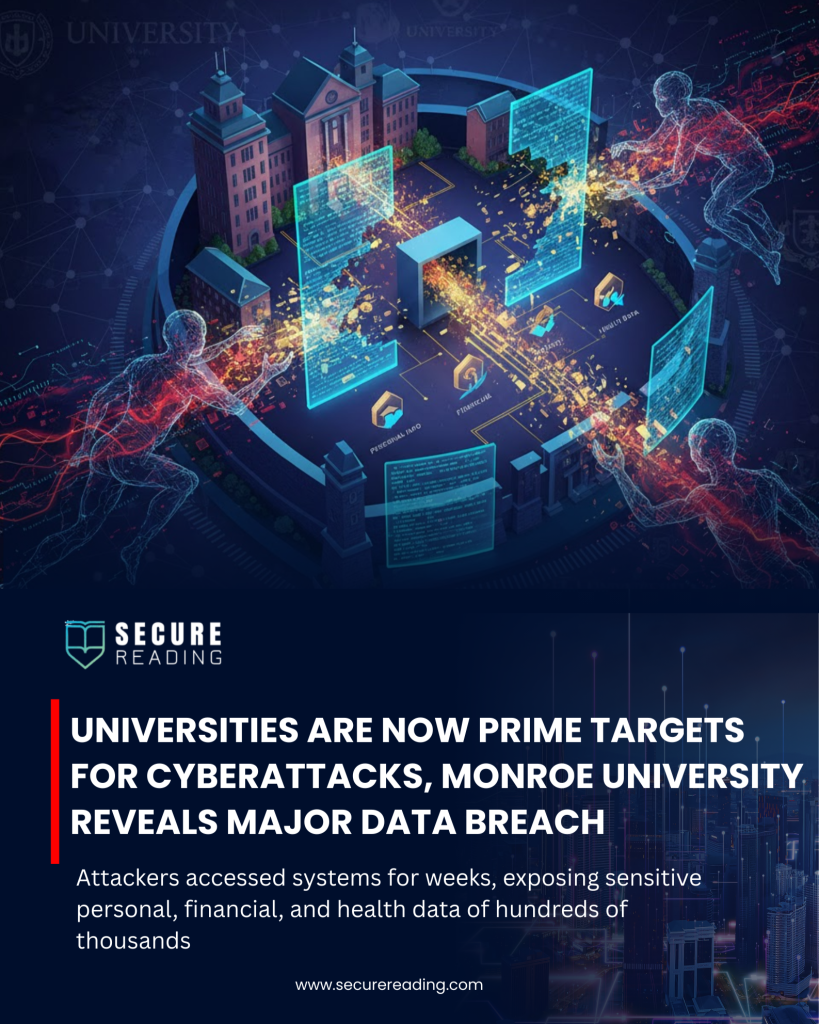
Universities are increasingly becoming prime targets for cyberattacks, and Monroe University has become the latest example of this growing trend. The institution has confirmed that threat actors breached its systems and stole sensitive personal, financial, and health information belonging to more than 320,000 individuals.
The incident highlights a broader shift in attacker focus, as higher-education institutions now face the same level of cyber risk traditionally associated with healthcare and financial sectors.
What Happened
According to official disclosures, attackers gained unauthorized access to Monroe University’s network for approximately two weeks, between December 9 and December 23, 2024. During this time, the intruders accessed and exfiltrated files containing sensitive information.
A subsequent forensic review, completed in September 2025, confirmed the scale of the exposure, affecting hundreds of thousands of current and former students, staff, and associated individuals.
Data Exposed
The compromised information varied by individual and may have included:
- Full names and dates of birth
- Social Security and government ID numbers
- Driver’s license and passport details
- Medical and health insurance information
- Financial account details
- Email credentials and student-related data
The breadth of exposed data significantly increases the risk of identity theft, fraud, and long-term misuse.
Response and Notifications
Monroe University began issuing formal breach notifications earlier this month, advising affected individuals to closely monitor financial accounts and credit reports for suspicious activity.
In addition, the university is offering one year of complimentary credit monitoring services to impacted individuals as part of its response efforts.
A Pattern Emerging Across Universities
This incident does not stand alone. In recent months, multiple universities across the United States have reported cyber incidents involving ransomware, data theft, and phishing campaigns.
Attackers increasingly target academic institutions because they store large volumes of sensitive data while often operating complex, decentralized IT environments. As a result, universities present attractive opportunities for both data theft and extortion.
Why Universities Are Becoming Targets
Higher-education institutions manage personal, financial, research, and health-related data across students, staff, donors, and partners. At the same time, open networks, legacy systems, and limited security resources can increase exposure.
Consequently, attackers view universities as high-value targets with potentially lower resistance compared to heavily regulated sectors.
Why This Matters
Cyber incidents in education extend beyond operational disruption. They impact trust, expose lifelong personal data, and can affect individuals years after graduation.
This breach serves as another reminder that cybersecurity is no longer optional for academic institutions. Universities now require the same level of cyber resilience planning as critical infrastructure and large enterprises.