

U.S. crackdown highlights how initial access brokers power global ransomware attacks.
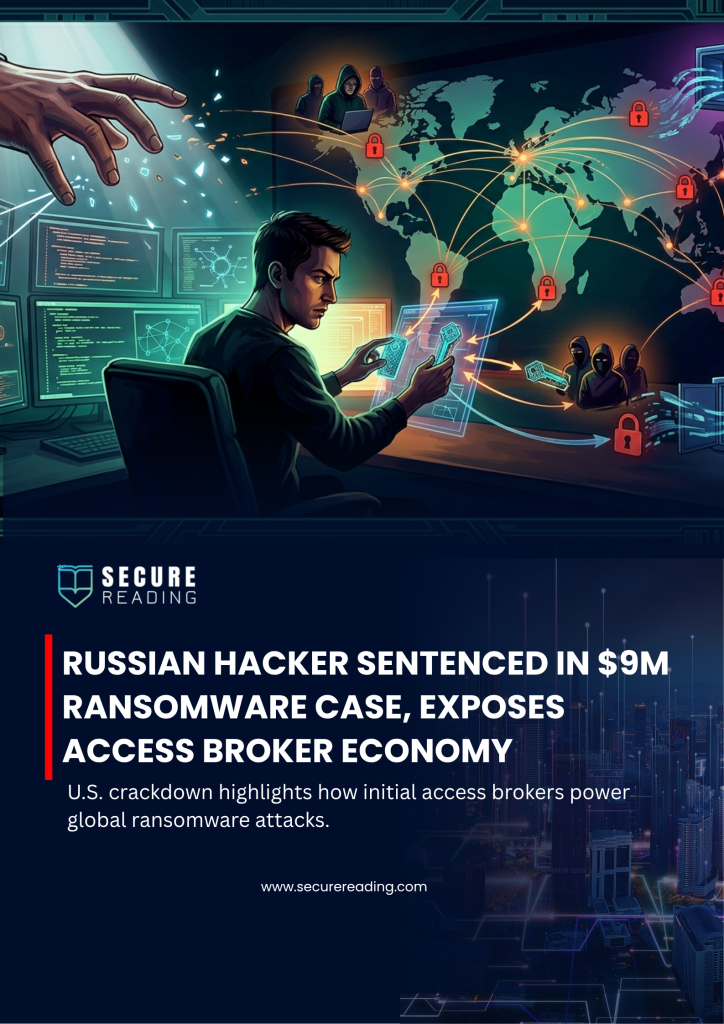
A U.S. court has sentenced a 26-year-old Russian national to 6.75 years in prison for his role in enabling large-scale ransomware attacks that caused millions in damages. However, this case goes beyond a single individual—it exposes the critical role of initial access brokers in today’s cybercrime ecosystem.
The individual, Aleksei Olegovich Volkov, acted as a key enabler for multiple ransomware groups, including the notorious Yanluowang operation. Instead of directly deploying ransomware, he specialized in gaining unauthorized access to corporate networks and selling that access to cybercriminal groups.
This model reflects a growing trend in cybercrime. Attackers now operate in a highly organized, service-based economy. One group gains access, another deploys ransomware, and yet another handles negotiations and payments. As a result, attacks have become faster, more scalable, and more damaging.
According to U.S. authorities, Volkov facilitated dozens of attacks across organizations in the United States. These incidents led to over $9 million in actual losses, while the total intended damage exceeded $24 million. After gaining access through vulnerabilities and unauthorized entry points, his co-conspirators deployed malware that encrypted systems and disrupted business operations.
Victims were then pressured into paying ransom demands—often in cryptocurrency—to regain access to their data and prevent public exposure on leak sites. Each successful payment earned Volkov a share of the proceeds, reinforcing the financial incentives behind this ecosystem.
Following his arrest in Italy in early 2024 and subsequent extradition, Volkov pleaded guilty and agreed to pay restitution exceeding $9 million to affected victims. Additionally, authorities seized tools and assets used in the attacks, signaling a continued effort to disrupt cybercriminal infrastructure.
Parallel Case: Ransomware Negotiators Under Scrutiny
Meanwhile, U.S. prosecutors have also charged another individual linked to the BlackCat (ALPHV) ransomware group. Unlike traditional hackers, this individual allegedly acted as a ransomware negotiator, helping threat actors extract higher payments from victims.
This development highlights another alarming trend—the professionalization of cyber extortion. Negotiators act as intermediaries, increasing pressure on victims while maximizing profits for ransomware groups.
Authorities have already seized millions in cryptocurrency and assets tied to this case. If convicted, the accused could face up to 20 years in prison.
Why This Matters
This case underscores a critical shift in cybersecurity risk. Organizations are no longer facing isolated attackers. Instead, they are up against coordinated ecosystems where different actors specialize in different stages of the attack lifecycle.
Initial access brokers, in particular, represent a major threat. Once they gain entry into a network, the access can be reused, sold multiple times, or weaponized by multiple groups. Therefore, a single vulnerability can lead to repeated attacks.
For UAE-based enterprises and global organizations alike, this reinforces the importance of securing entry points. Weak credentials, exposed services, and unpatched vulnerabilities remain the most common pathways for attackers.
Security Takeaways for Organizations
To reduce exposure to access broker-driven attacks, organizations should:
- Continuously monitor for unauthorized access attempts
- Patch vulnerabilities in internet-facing systems quickly
- Implement multi-factor authentication across all critical services
- Detect unusual lateral movement within networks
- Strengthen identity and access management policies
Additionally, organizations must prepare for incident response scenarios involving ransomware negotiations and data exposure risks.