

A hard truth about accountability, expectations, and leadership during cyber incidents
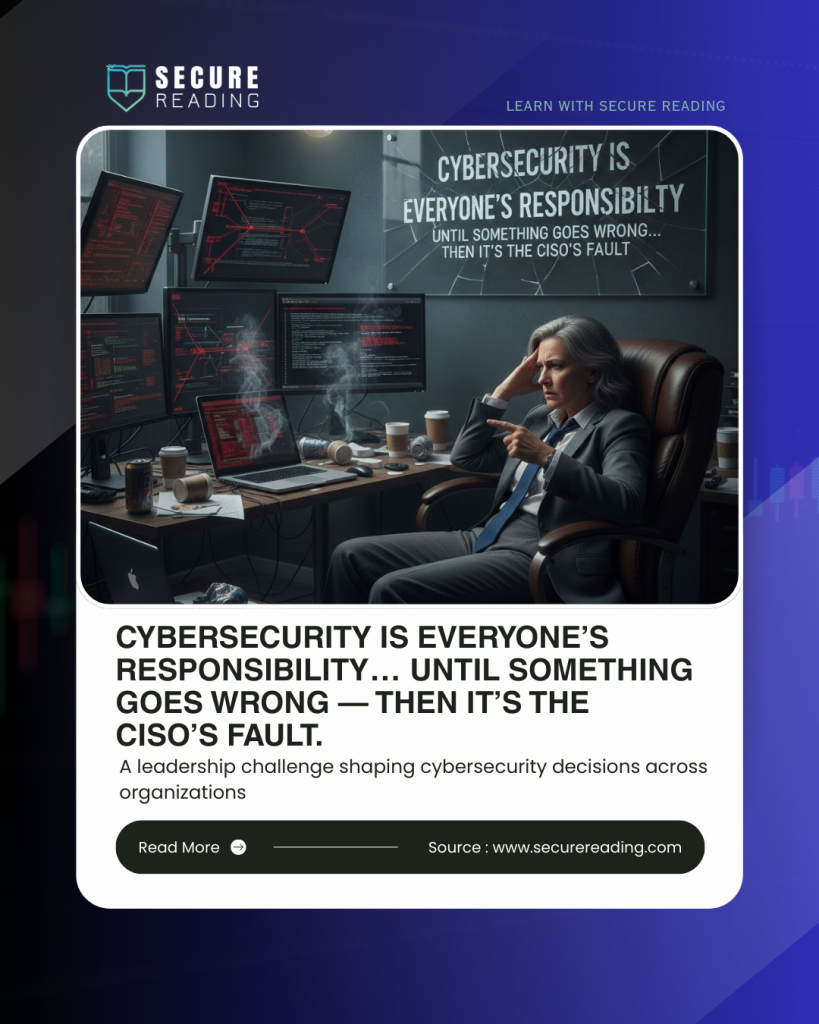
This statement may sound blunt, but it captures a reality many organizations quietly experience.
In most enterprises, cybersecurity responsibilities are formally distributed. Infrastructure teams manage systems and networks. Application teams follow secure development practices. HR oversees insider risk and awareness. Business units own data and operational processes. Governance frameworks reinforce this shared responsibility model.
However, when a cyber incident occurs, that structure often fades into the background.
During executive briefings and board discussions, accountability tends to converge rapidly on one role — the CISO. Questions focus less on how risk decisions evolved across the organization and more on why security controls did not prevent the incident entirely.
This shift is not new. Multiple past incidents across industries show a consistent pattern: even when contributing factors span business priorities, legacy constraints, delayed investments, or accepted risks, the CISO becomes the primary focal point.
The challenge lies in expectation alignment.
Organizations frequently expect CISOs to influence areas they do not fully control. Security leaders are asked to manage risk across systems, vendors, users, and business processes, while authority and ownership remain distributed. During normal operations, this shared model works. During incidents, it creates tension.
CISOs often operate in an environment where risk decisions are made collaboratively, yet accountability is concentrated. This imbalance increases pressure and complicates incident response, especially when leadership seeks clear answers under time constraints.
More mature organizations address this proactively. They define decision ownership clearly, document accepted risks at the leadership level, and align accountability with authority. As a result, incident response discussions focus on resolution and learning, not misplaced blame.
Cybersecurity functions best when responsibility and accountability move together — before an incident, not after it.
For CISOs, the role is no longer just technical defense. It is leadership under scrutiny, clarity under pressure, and governance in action when it matters most.